Somatic
Practices

What is Somatic Therapy?
Somatic therapy focuses on the integration of the entire body into the therapy space (“Soma” means “Body” in Greek). You will be invited to pay attention to your body language, notice how you are breathing or speaking, or if you feel any sensations such as tightness, tension or pressure.
I will help you to listen to those ‘messages’ of your body so that you get a better understanding of underlying patterns or emotions that you might not be aware of as you go about your daily life.
Could Somatic Therapy help me?
I have chronic pain, but medical professionals can’t help me.
I carry a lot of tension in my body and can’t relax.
I want to live a more holistic lifestyle and improve the relationship I have with my body.
I know that I have experienced trauma in the past, but just talking about it doesn’t feel enough.
I want to do more than just ‘talk therapy’.
I want to learn to be comfortable with uncomfortableness.
Learn more about Somatic IFS Therapty

Somatic IFS
Somatic IFS was developed by Susan McConnell and emphasizes the connection between the body and the mind. The somatic practices (resonance, awareness, breath, movement and touch) foster a more embodied connection with the energies in your body. With gentle guidance and consent from your system, we can access deep core beliefs and trauma - even pre-verbal or non-verbal. Somatic IFS can also help to restore the relationship that you have with your body, and it can be helpful when working with chronic pain or illness.
Instead of managing or dealing with your problem-body, you learn to attune to the messages of your body with curiosity and openness.
Polyvagal Theory
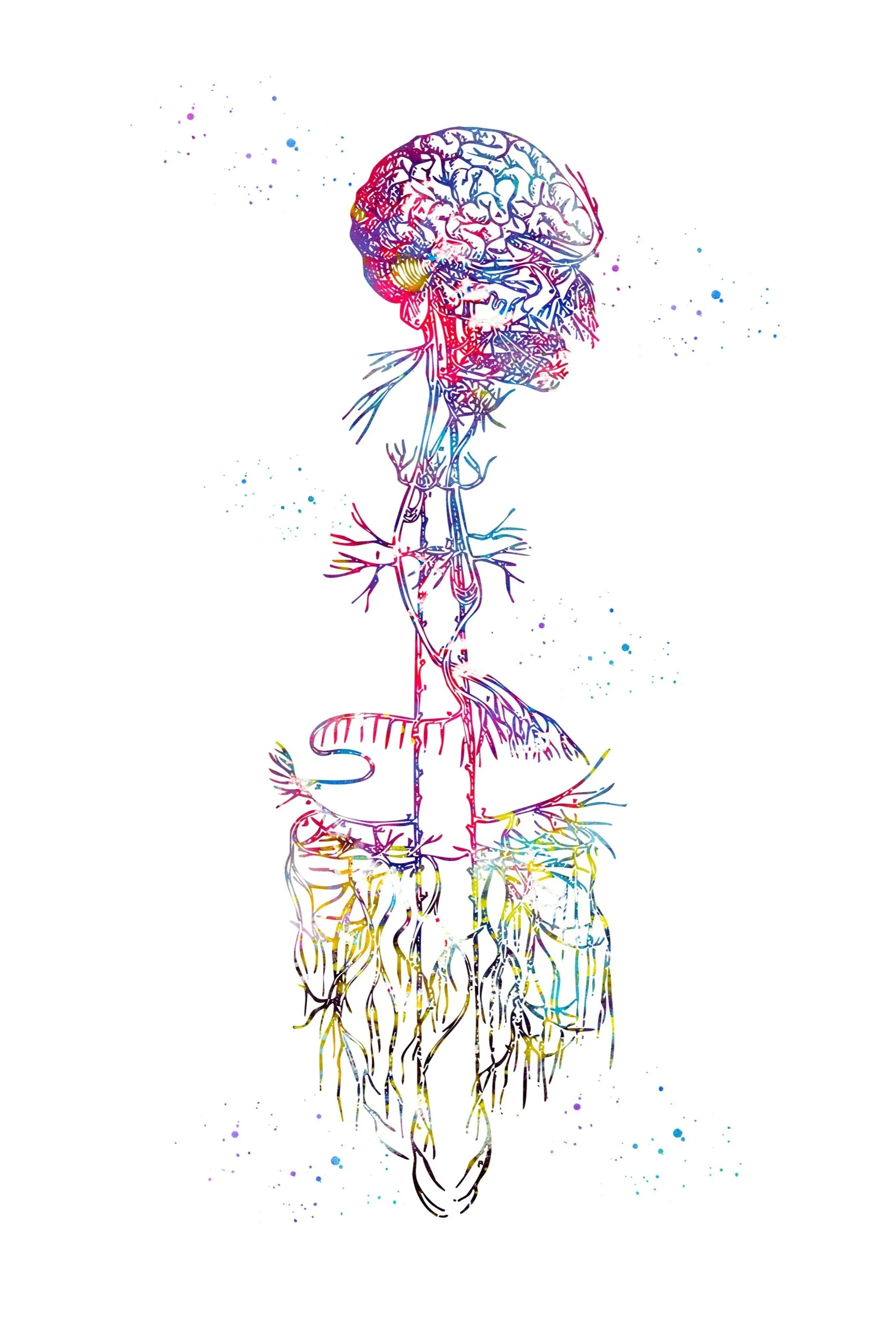
Polyvagal Theory was developed by Dr. Stephen Porges, and it explains how our body and nervous system respond to stress, and how our sense of feeling safe or unsafe impacts our behavior.
Our brains constantly assess our environment for cues of safety or danger (unconscious process), and that determines the automatic response of your nervous system. If we constantly feel unsafe, due to trauma or environmental triggers, our body is in a continuous state of stress and activation.
Through regulation of the nervous system, we can return to a sense of felt safety and leave the fight or flight state.
The findings of polyvagal theory explain “over-reacting”, '“irrational fears” and “shutdown-responses” as a fear response of a traumatized system.